
Warehouse Cleanout Secrets That Free Up Thousands in Square Footage
A strategic warehouse cleanout can unlock thousands of square feet you didn’t know you had—without expanding your building or moving locations. For many operations, a well-planned cleanout is the fastest way to improve capacity, safety, and throughput while cutting storage costs. This guide walks through practical, people-first tactics you can use to reclaim space and transform your facility into a lean, efficient asset.
Why a Warehouse Cleanout Is a Hidden Profit Center
Most warehouses are slowly “designed by accident.” Pallets get parked “temporarily,” dead inventory hides behind fast movers, and obsolete equipment takes up prime real estate. Over years, the layout becomes cluttered and inefficient.
A structured warehouse cleanout:
- Frees up thousands of square feet for new inventory, production, or value-added services
- Reduces travel time and picking errors
- Improves safety and OSHA compliance
- Lowers carrying costs by eliminating obsolete and slow-moving stock
- Defers or eliminates the need for a building expansion or second facility
According to the Warehousing Education and Research Council, travel time can account for more than half of picking hours in many facilities (source: WERC). Reclaiming space through a cleanout creates tighter, more logical layouts that significantly cut that waste.
Step 1: Set Clear Goals for Your Warehouse Cleanout
Before anyone touches a pallet, define why you’re doing this. A vague “let’s get organized” won’t stick.
Clarify:
- Space goal: How many square feet do you want to free up?
- Operational goal: Faster picking? More dock capacity? Room for kitting or light manufacturing?
- Financial goal: Reduce storage costs, avoid expansion, or monetize obsolete assets?
If you can say, “We need 5,000+ usable square feet to stage outbound loads and add a value-added-services area,” you can judge every cleanout decision against that target. It turns a messy project into a focused business initiative.
Step 2: Map Your Current Space and Utilization
You can’t optimize what you can’t see. Start with a quick, high-level space audit.
Create a simple warehouse map
- Sketch or export a floor plan from your WMS or CAD files.
- Mark all major zones: receiving, bulk storage, rack storage, picking, staging, returns, maintenance, and offices.
- Note clear heights and any structural constraints (columns, sprinklers, mezzanines).
Walk the floor for “visual waste”
With your map in hand, walk the building and mark:
- Dead aisles: Underused or blocked aisles that serve little purpose
- Graveyards: Corners filled with “we’ll deal with it later” pallets
- Obsolete equipment: Broken forklifts, unused conveyors, outdated racks
- Misplaced product: High-velocity SKUs stored in remote or hard-to-reach locations
This walkthrough gives you a reality check and shows exactly where your warehouse cleanout will have the biggest impact.
Step 3: Clean Up Your Data to Drive Smart Decisions
A warehouse cleanout is not just about brooms and dumpsters; it’s about data. Dirty inventory data leads to dirty space planning.
Pull key inventory reports
From your WMS or ERP, run:
- ABC analysis: Classify SKUs by movement (A = fast, B = medium, C = slow).
- Dead stock report: Items with zero movement during a defined period (e.g., 12–18 months).
- Location utilization: Storage locations vs. occupancy, by zone or rack.
- Aging by location: How long items have stayed in specific areas.
Use data to tag inventory
For the physical cleanout, tag items with categories such as:
- Keep – Fast mover (re-slot closer to shipping)
- Keep – Standard
- Liquidate (sell, discount, or return to vendor)
- Dispose / Recycle
- Investigate (data mismatch, ownership unclear)
Data turns subjective debates (“We might need that someday”) into objective decisions (“This SKU hasn’t moved in 24 months and is blocking prime pallet positions”).
Step 4: Design Your Future-State Layout Before You Move Anything
A powerful warehouse cleanout strategy starts with a vision of the “after” picture. Don’t just rearrange; redesign.
Align layout with product velocity
- Place A-items closest to shipping and at the most ergonomic pick heights.
- Store B-items in reachable but secondary areas.
- Move C-items and slow movers to higher or more remote locations.
This velocity-based slotting reduces travel and consolidates high-demand products into a tight “golden zone.”
Right-size your storage systems
Ask:
- Are you using pallet rack for items that should be in shelving or carton flow?
- Are pallets stored one-high where racking could safely allow two or three positions vertically?
- Do you have bulk floor storage that could be racked?
Adding racking or reconfiguring beam levels often frees up thousands of square feet by using vertical capacity you’re already paying for.
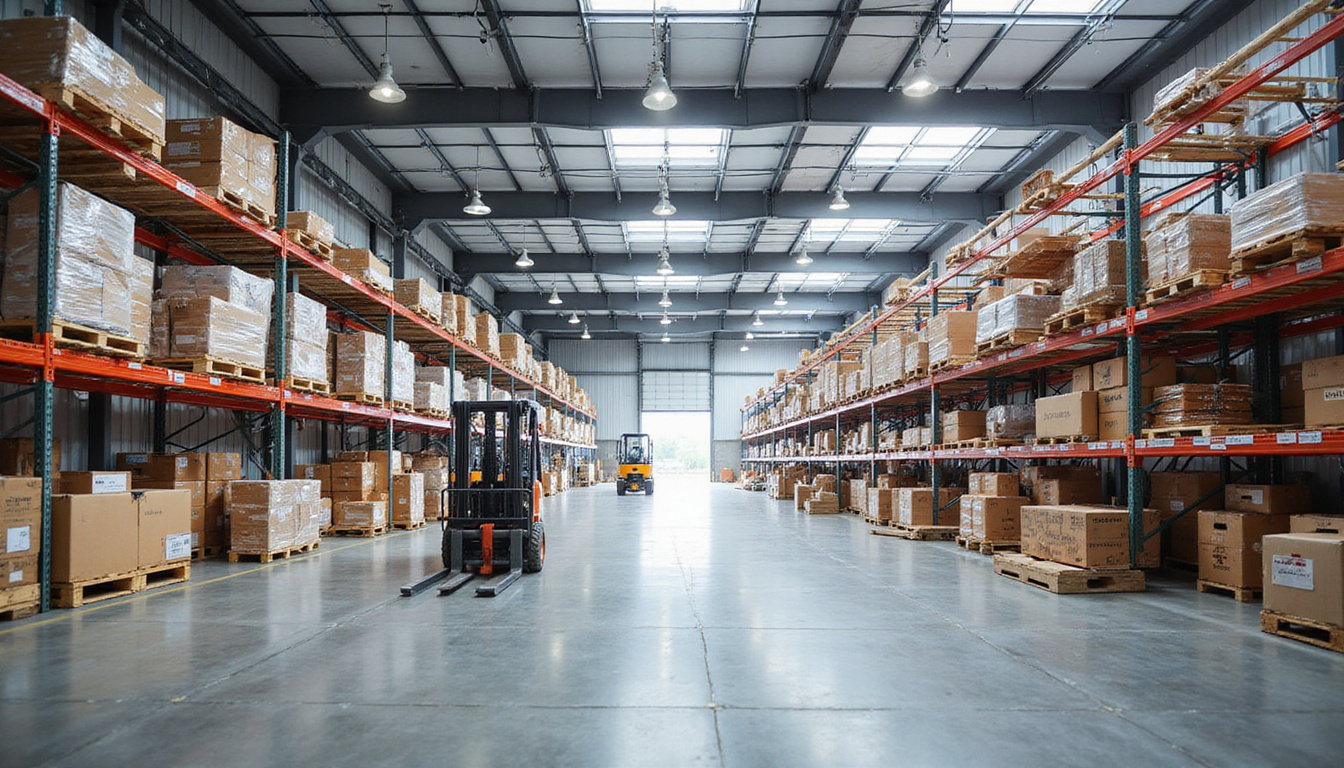
Step 5: Execute the Physical Warehouse Cleanout in Phases
Now it’s time for boots on the ground. A phased approach keeps operations running while you reclaim space.
Build a cross-functional cleanout team
Include:
- Warehouse supervisors and leads
- Inventory control / cycle counters
- Safety / facilities representative
- IT or WMS admin
- A decision-maker who can approve disposal or liquidation
Prioritize high-impact zones
Don’t try to do everything at once. Focus on:
- Docks and staging areas – clutter here creates ripple effects across your whole operation.
- Fast-pick zones – clean, compact, efficient picking areas create immediate labor savings.
- Graveyard corners and dead aisles – quick wins that visibly free space.
Standardize your on-the-floor process
For each zone:
- Clear walkways and safety routes first.
- Segregate inventory by the tags you prepared (keep, liquidate, dispose, investigate).
- Relocate fast movers into optimized slots defined in your future-state layout.
- Break down and remove obsolete racking or equipment.
- Clean floors and inspect for damage, leaks, or safety hazards before re-slotting.
Step 6: Dealing with Obsolete Inventory and Equipment
One of the biggest space wasters in any warehouse cleanout is obsolete inventory—those pallets that never move but never quite get thrown away.
Options for obsolete or dead stock
- Return to vendor under existing agreements or negotiate return terms.
- Liquidation partners to sell at a deep discount.
- Online marketplaces for bulk or surplus items.
- Donation for tax benefits where appropriate.
- Recycling or responsible disposal when no secondary market exists.
Likewise, evaluate old equipment:
- Sell or trade in unused forklifts, pallet jacks, or conveyors.
- Scrap damaged racking that can’t be safely reused.
- Consolidate maintenance parts and tools into a single, labeled area.
Every removed pallet and piece of equipment inches you closer to those “found” thousands of square feet.
Step 7: Capture and Protect Your Newly Freed Space
Reclaiming space is only half the battle; you need systems to keep it that way.
Policy changes to lock in gains
- No “temporary” storage in aisles: Anything parked in a travel lane must have a time limit and owner.
- Strict put-away rules: Enforce WMS-directed put-away rather than “wherever it fits.”
- Disposition rules for slow movers: Auto-flag SKUs that haven’t moved in X months for review.
- Regular micro-cleanouts: Schedule weekly 30-minute “5S” sessions by zone.
Visual controls and labeling
Implement:
- Floor striping and signage for aisles, staging zones, and no-storage areas.
- Consistent rack labels and location IDs that match your WMS.
- Shadow boards and labeled storage for tools, stretch wrap, and supplies.
These visual cues make it easy for new hires and veterans alike to maintain order.
Step 8: Measure the Impact of Your Warehouse Cleanout
To prove ROI and secure support for ongoing improvements, track before-and-after metrics.
Useful KPIs include:
- Space utilization: Pallet positions used vs. total available
- Pick path distance/time: Average distance or time per pick route
- Order cycle time: From order receipt to ship confirmation
- Dock-to-stock time: Time to receive and store inbound goods
- Safety indicators: Incidents, near-misses, and blocked exits or aisles
Even simple, manual measurements (e.g., walking distance for a typical order before and after) can show dramatic upgrades.
Common Warehouse Cleanout Mistakes to Avoid
Be aware of typical pitfalls that can undermine your efforts:
- Skipping the data analysis: Cleaning without data just rearranges the mess.
- Ignoring stakeholders: Not involving inventory control, safety, or IT leads to conflicting priorities.
- Overloading popular zones: Moving everything “close to shipping” without respecting capacity.
- Failing to update systems: Physical changes must be reflected in the WMS; otherwise, you create chaos.
- No follow-through: One-time cleanouts revert unless you build in maintenance routines.
Quick-Start Checklist for Your Next Warehouse Cleanout
Use this list as a launchpad for your project:
- Define space, operational, and financial goals.
- Map current layout and identify graveyard zones.
- Run ABC, dead-stock, and utilization reports.
- Design your future-state layout and slotting plan.
- Build a cross-functional cleanout team and schedule phased work.
- Tag and segregate inventory: keep, liquidate, dispose, investigate.
- Remove obsolete equipment and unused racking.
- Implement new policies, labels, and visual controls.
- Update your WMS with new locations and rules.
- Track KPIs and schedule recurring mini-cleanouts.
FAQ: Warehouse Cleanout and Space Optimization
Q1: How often should we plan a full warehouse cleanout?
A comprehensive warehouse cleanout is typically needed every 1–2 years, depending on SKU volatility and seasonality. However, you should schedule smaller, zone-based cleanups monthly or quarterly to prevent major clutter from building back up.
Q2: What’s the difference between a warehouse clean out and regular housekeeping?
Day-to-day housekeeping focuses on trash, minor re-slotting, and keeping aisles clear. A strategic warehouse clean out is a deeper project that uses data to eliminate dead stock, reconfigure racking, change layout, and redesign processes to permanently free up space and increase capacity.
Q3: Can a warehouse cleanout really eliminate the need for expansion?
In many cases, yes. By removing obsolete inventory, optimizing slotting, and fully using vertical space, warehouse space cleanout projects often free 10–30% of usable capacity. For some operations, that reclaimed space postpones or completely avoids a costly expansion or relocation.
Freeing up thousands of square feet doesn’t require new construction—it requires intention. By treating your warehouse cleanout as a data-driven, cross-functional initiative rather than a one-off spring cleaning, you can unlock hidden capacity, cut costs, and build a safer, more efficient operation.
If you’re ready to reclaim your space and want help planning or executing a high-impact warehouse cleanout—from data analysis and layout design to on-site implementation—reach out today. A short consultation can reveal exactly how much capacity you can gain and how quickly those improvements will pay for themselves.
Junk Guys San Diego
Phone: 619-597-2299
Website: www.olive-deer-348861.hostingersite.com
Email: junkguyssd619@gmail.com